Emotional Vibe Coding: How to Read (and Share) Your Feelings in Dating
If "How are you?" gets you a reflexive "Fine," but "What's your emotional vibe today?" sparks actual conversation—welcome to the era of vibe coding.
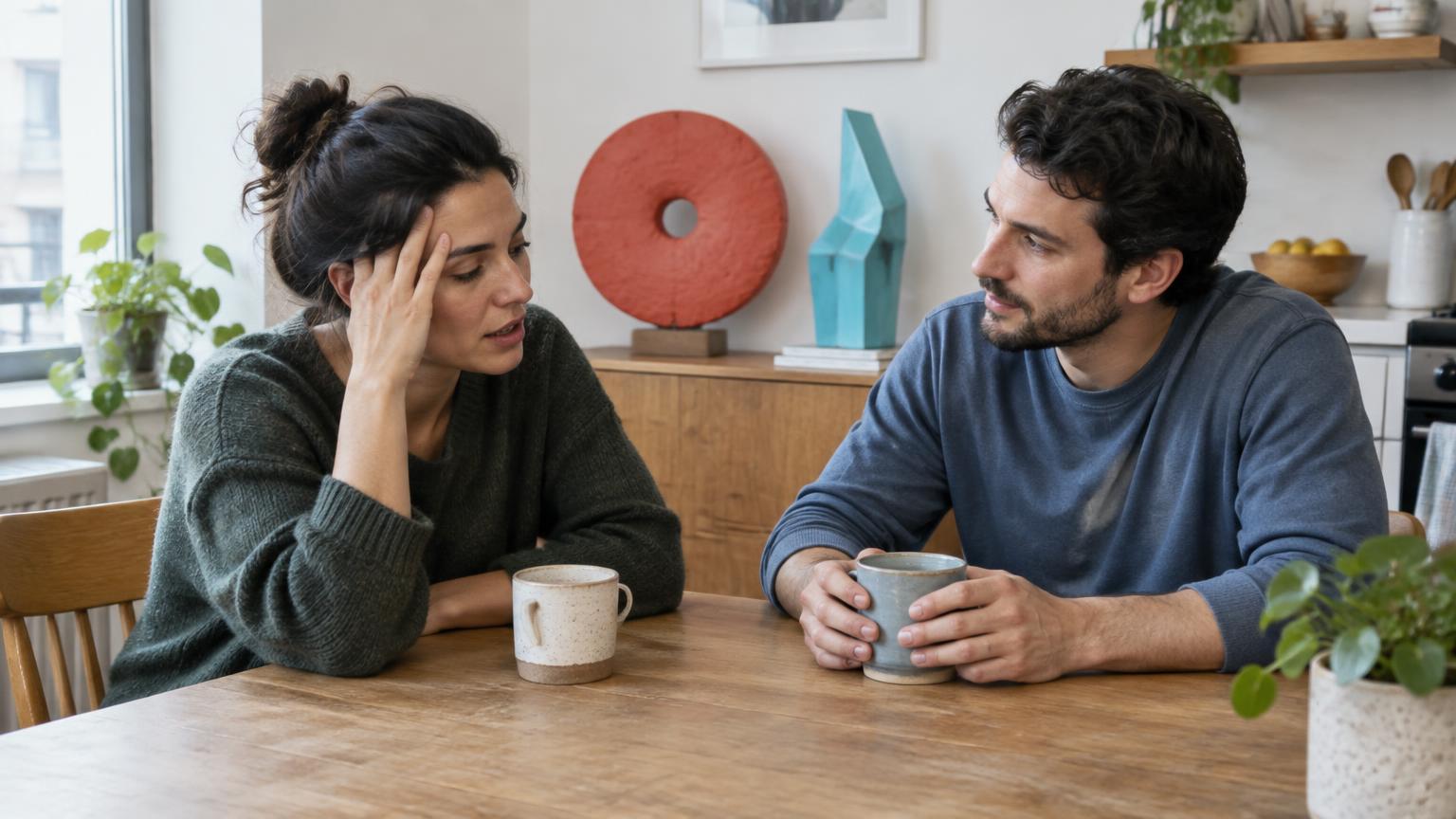
The way we communicate emotions is evolving. Traditional emotional vocabulary—happy, sad, angry, anxious—often feels clinical, limited, and unable to capture the full spectrum of human experience. Enter vibe coding: a cultural shift toward more nuanced, metaphorical, and ultimately more honest emotional expression.
Gen Z and Millennials are reinventing emotional vocabulary, and it's actually helping people communicate better in relationships. Research from the Gottman Institute suggests that couples with richer emotional vocabularies have 40% better conflict resolution outcomes and report higher relationship satisfaction.
Here's your complete guide to emotional vibe coding and how to use it in your dating life.
Try a few questions right now
Free · No sign-up
What Is Vibe Coding?
Vibe coding is the practice of using evocative, often non-clinical language to describe emotional states. Instead of basic emotional vocabulary (happy, sad, angry), vibe coding uses more nuanced, often metaphorical descriptions that capture the full texture of a feeling.
Examples
| Clinical | Vibe Coded |
|---|---|
| "I'm anxious" | "I'm giving nervous system chaos" |
| "I'm happy" | "I'm in my softgirl era" |
| "I'm stressed" | "Everything is giving overloaded CPU" |
| "I feel disconnected" | "I'm in my hermit arc" |
| "I'm attracted to you" | "You're giving main character energy" |
| "I'm overwhelmed" | "My bandwidth is at zero" |
| "I'm content" | "This is giving cozy Sunday energy" |
| "I'm frustrated" | "I'm in my villain origin story" |
Why It Works
Vibe coding often conveys more emotional information than traditional vocabulary because it:
- Uses shared cultural references that carry emotional weight
- Reduces the clinical feeling of emotional disclosure
- Makes vulnerability feel more casual and less intense
- Allows for humor as a bridge to honesty
- Creates shared understanding between partners
- Normalizes emotional expression in everyday conversation
The Emotional Vibe Coding Dictionary
Positive Vibes
✨ Golden Hour Energy That warm, content feeling when everything feels bathed in gentle light. Often used to describe early relationship bliss or moments of perfect contentment.
"That date had serious golden hour energy."
🌊 Main Character Energy Feeling like the protagonist of your own life. Confident, centered, narratively significant.
"I went in with full main character energy and asked for their number."
🌸 Soft Launch Mode The early stages of something—a relationship, a feeling, a change—before full commitment or announcement.
"We're soft launch mode. Not official, but definitely something."
🔥 Unhinged (Positive) Doing something bold, potentially reckless, but in a way that feels freeing and authentic.
"I texted first and was completely unhinged about my feelings."
💫 Fairy Tale Arc When things are progressing like a romantic story. Synchronized, serendipitous, meant-to-be feeling.
"Meeting their parents went full fairy tale arc."
☀️ Serotonin Boost A sudden hit of happiness from something small but meaningful.
"That good morning text gave me a full serotonin boost."
🌈 Aligned Energy When everything clicks—your mood, your partner's mood, the vibe of the day.
"We're in such aligned energy today. Everything just flows."
Neutral/Processing Vibes
🌙 Hermit Arc Period of intentional solitude and introspection. Not depression—chosen withdrawal for processing.
"I'm in my hermit arc right now. Need to figure out what I actually want."
📊 Overthinking Era Hyperanalysis phase. Could be about a text, a look, a decision. The mental spreadsheet is running.
"I'm in my overthinking era about what that pause in their text meant."
🎭 NPC Mode Going through motions without feeling fully present. Not quite checked out, just operating on autopilot.
"Sorry, I've been in NPC mode this week. Nothing feels real."
🔄 Processing Loading Actively working through something. Not ready to discuss, but not avoiding—just still computing.
"I can't answer that yet. Processing loading."
🌊 Emotional Tide Feelings that come and go in waves. Not stable, not crisis—just fluctuating.
"It's an emotional tide situation. Some hours I'm fine, some I'm not."
⏸️ Buffer Zone Mode Needing time between activities or conversations to reset.
"I need buffer zone mode before we go out. Just 20 minutes to decompress."
Challenging Vibes
🖤 Villain Era Period of prioritizing self over others' opinions or expectations. Often follows people-pleasing burnout.
"I'm in my villain era. Not apologizing for having needs."
💀 Dead Inside (Temporary) Emotional numbness, usually from overwhelm or exhaustion. Different from depression—more like temporary shutdown.
"After that conversation, I'm dead inside. Need 24 hours."
🚨 Fight or Flight Activated Nervous system is triggered. Could present as anxiety, defensiveness, or urge to flee.
"That topic has my fight or flight fully activated."
🌀 Spiral Mode Negative thought loops. Anxiety feeding on itself. Often needs external interruption.
"I'm in spiral mode about this. Can you reality check me?"
❄️ Freeze Response Unable to act or decide due to overwhelm. Different from procrastination—this is paralysis.
"I'm in freeze response about confronting this. Can't move forward or back."
🔋 Low Battery Warning Running on empty—emotionally, mentally, or physically.
"I'm at low battery warning right now. Need to recharge before I can be fully present."
Relationship-Specific Vibes
🎯 The Ick Sudden, visceral loss of attraction. Often triggered by small, specific behavior.
"They chewed with their mouth open and gave me the ick instantly."
💭 Situationship Energy More than casual, less than committed. The undefined zone.
"It's giving situationship energy. No labels, but consistent time."
🌹 Honeymoon Phase Vibes Early relationship intensity. Everything is wonderful. Red flags invisible.
"We're full honeymoon phase vibes. Ask me again in three months."
🔥 Slow Burn Energy Attraction building gradually over time. Not instant chemistry, but deepening connection.
"It's slow burn energy. Didn't feel it at first, now I can't stop thinking about them."
🦋 Butterflies or Anxiety? The uncertainty of whether physical sensations indicate attraction or warning.
"Having a 'butterflies or anxiety' moment. Can't tell if I'm excited or scared."
How to Use Vibe Coding in Your Relationship
Starting Conversations
Instead of "How was your day?" try:
- "What's your vibe today?"
- "Are you in an era I should know about?"
- "Where's your energy at?"
- "What's your emotional weather report?"
- "On a scale from hermit arc to main character energy, where are you?"
These open-ended prompts invite more interesting responses than yes/no or one-word answers.
Expressing Your State
Using vibe language can lower the stakes of emotional disclosure:
Too intense: "I need to talk about something that's been causing me significant anxiety about our relationship."
Vibe coded: "I've been in my overthinking era about something. Can I share?"
Both communicate the same need, but vibe coding feels more accessible and less alarming.
During Conflict
Vibe language can de-escalate by adding lightness:
Escalating: "You always dismiss my feelings and I'm angry."
Vibe coded: "When you said that, it activated full fight or flight and now I'm in spiral mode. I need a minute."
The second version expresses the same experience but creates more space for repair.
Making Requests
Direct but cold: "I need physical affection."
Vibe coded: "I'm craving golden hour energy. Can we just be cozy tonight?"
Same request, warmer delivery.
Creating Your Own Vibe Vocabulary
As a Couple
Over time, develop your own shorthand:
- "I'm at a 7" (on your personal scale)
- "This is a mango situation" (whatever that means to you)
- "I need my cave time" (your version of hermit arc)
- "I'm in a Tuesday mood" (your code for feeling blah)
- "Let's activate cozy mode" (your signal for quality time)
Private Language Benefits
Research shows couples with unique communication patterns:
- Feel more connected
- Resolve conflicts more efficiently
- Report higher relationship satisfaction
- Experience greater intimacy
Your vibe vocabulary becomes relationship infrastructure.
When Vibe Coding Doesn't Work
Know the Limits
Vibe coding supplements clear communication—it doesn't replace it.
Vibe coding can:
- Start conversations
- Lower emotional temperature
- Add lightness to vulnerability
- Create shared language
- Make emotional expression more accessible
Vibe coding can't:
- Replace direct requests
- Substitute for saying "I love you"
- Work if your partner doesn't understand the language
- Fix communication problems alone
- Avoid necessary difficult conversations
Translation Needed
If your partner isn't fluent, translate:
"I'm in my villain era" → "I'm prioritizing my needs right now, which might come across as less accommodating than usual."
Meet them where they are linguistically.
Vibe Check: Questions for Couples
Try these in your next deep conversation:
- What era are you in right now in your life?
- What gives you main character energy?
- What triggers your fight or flight in our relationship?
- When did you last feel golden hour energy with me?
- What's a vibe I give that you love?
- What's a vibe I give that you wish I'd work on?
- What era do you hope we're entering as a couple?
- What helps you exit spiral mode?
- How can I support you during your hermit arc phases?
- What does aligned energy look like for us?
- What's our relationship vibe right now?
- What emotional language do you wish I used more?
Try It With Here We Ask
Our decks include vibe-friendly questions that spark these kinds of conversations. Start with the Connection deck for emotionally intelligent date nights.
Start a Vibe Check Conversation →
How to Introduce Vibe Coding to Your Partner
Not everyone naturally speaks this way. Here's how to introduce it:
- Start casual - Use vibe language naturally without explaining it
- Model it - Share your emotional state using vibe terms
- Explain when asked - "Oh, hermit arc just means I need alone time to process"
- Create together - Invite them to develop your own terms
- Be patient - Not everyone will adopt it immediately
The Future of Emotional Language
Language evolves to meet the needs of its speakers. The rise of vibe coding reflects:
- Increased emotional awareness in younger generations
- Need for vocabulary that matches lived experience
- Desire for intimacy that doesn't feel clinical
- Cultural shift toward normalizing emotional conversation
- Integration of therapy concepts into everyday language
Whether you think it's genius or cringe, vibe coding is how millions of people are learning to talk about their inner lives.
Your relationship can benefit from joining the conversation.
Sources
- Pennebaker, J. W. (2011). The Secret Life of Pronouns. Bloomsbury Press.
- Tannen, D. (1990). You Just Don't Understand: Women and Men in Conversation. William Morrow.
- Fischer, A. H., & Manstead, A. S. R. (2008). "Social functions of emotion." Handbook of Emotions.
- Lieberman, M. D., et al. (2007). "Putting feelings into words: Affect labeling disrupts amygdala activity in response to affective stimuli." Psychological Science.
- Gottman, J. M. & Silver, N. (2015). The Seven Principles for Making Marriage Work. Harmony Books.